
ProjectsDams · Instrumentation
Gross Dam Galleries, Boulder, Colorado
- Clients
- Denver Water, Kiewit, Barnard
- Location
- Boulder, Colorado
- Years
- 2025-26
- Work
- Dams, Instrumentation
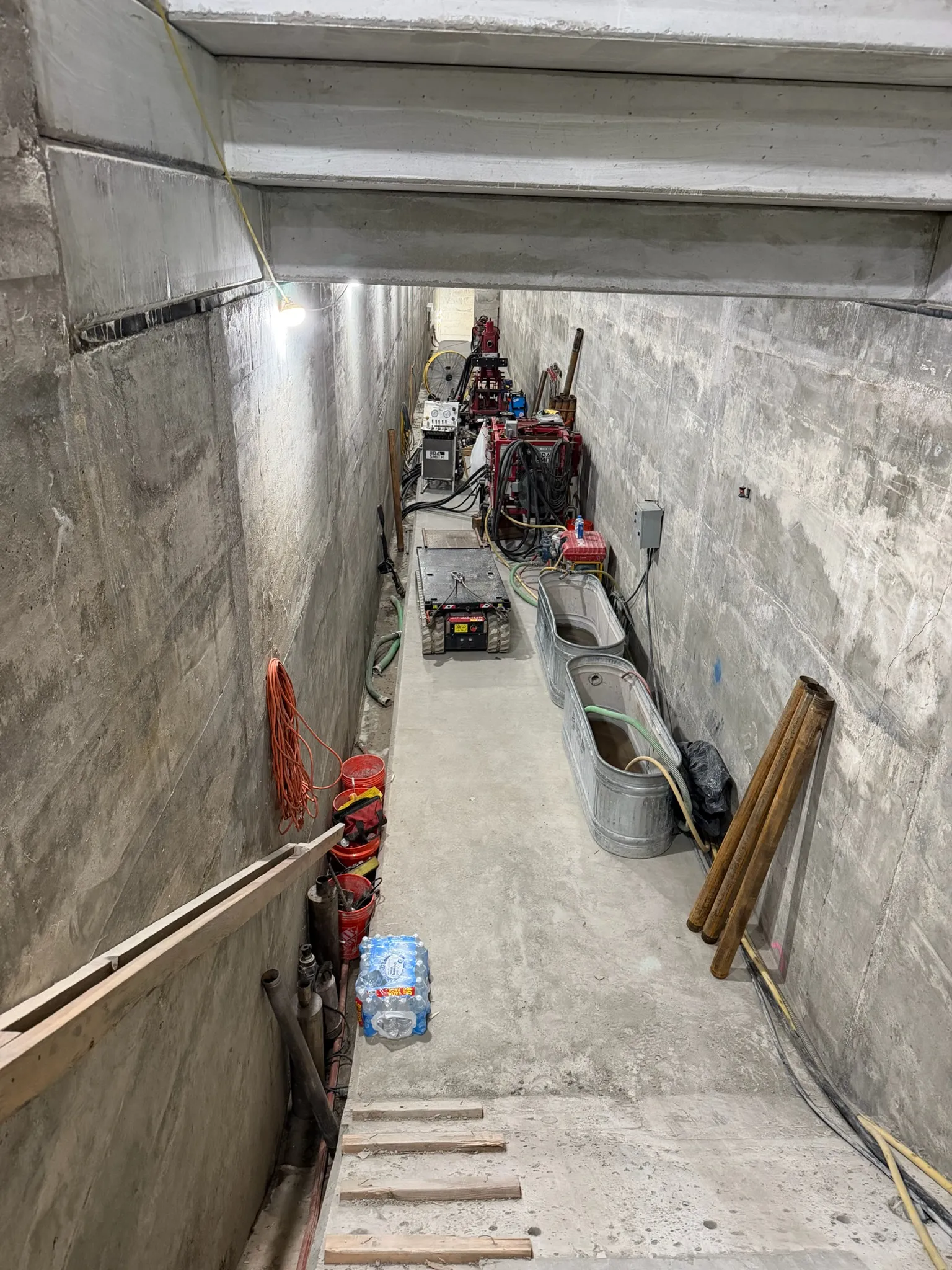
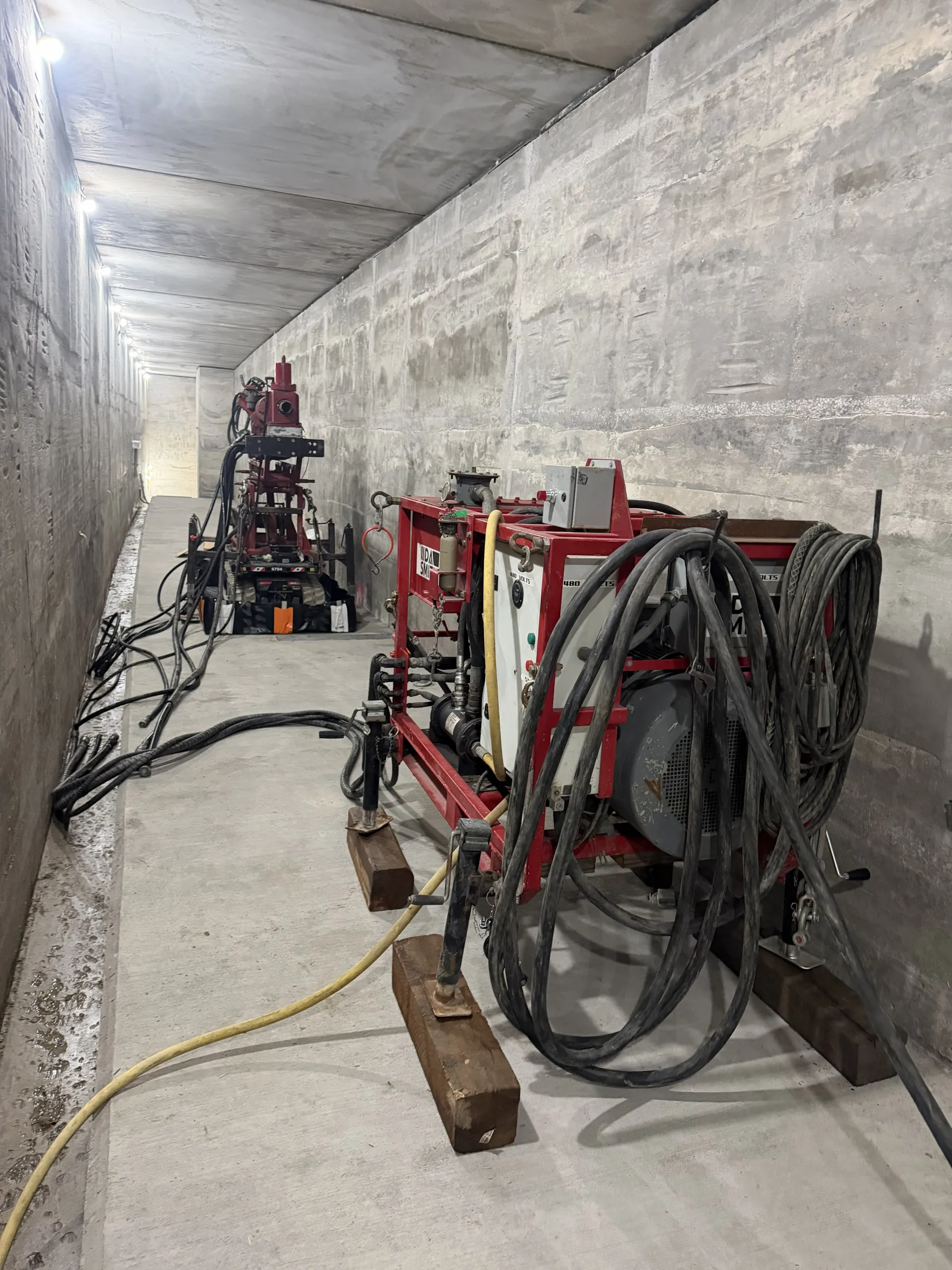
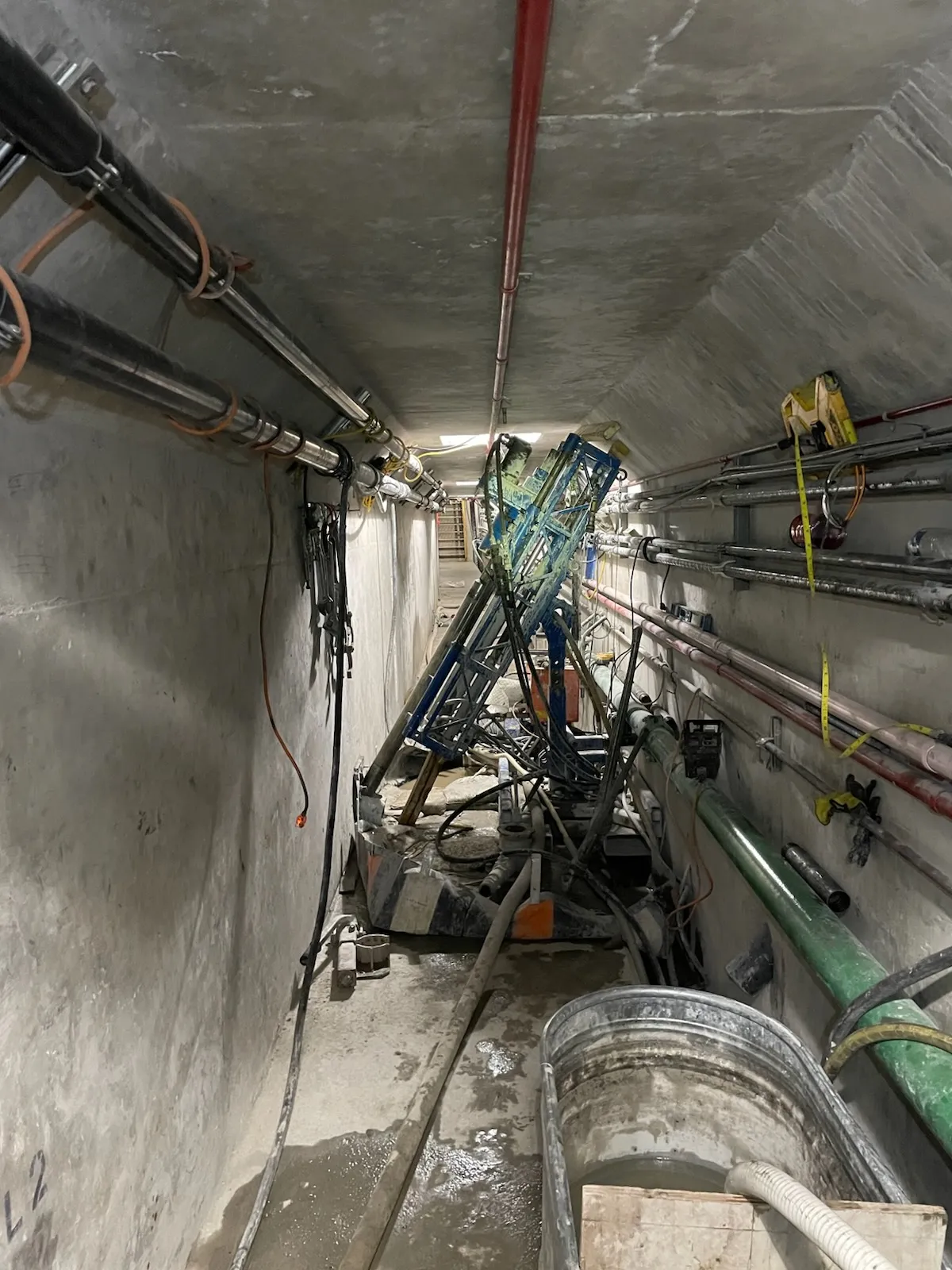
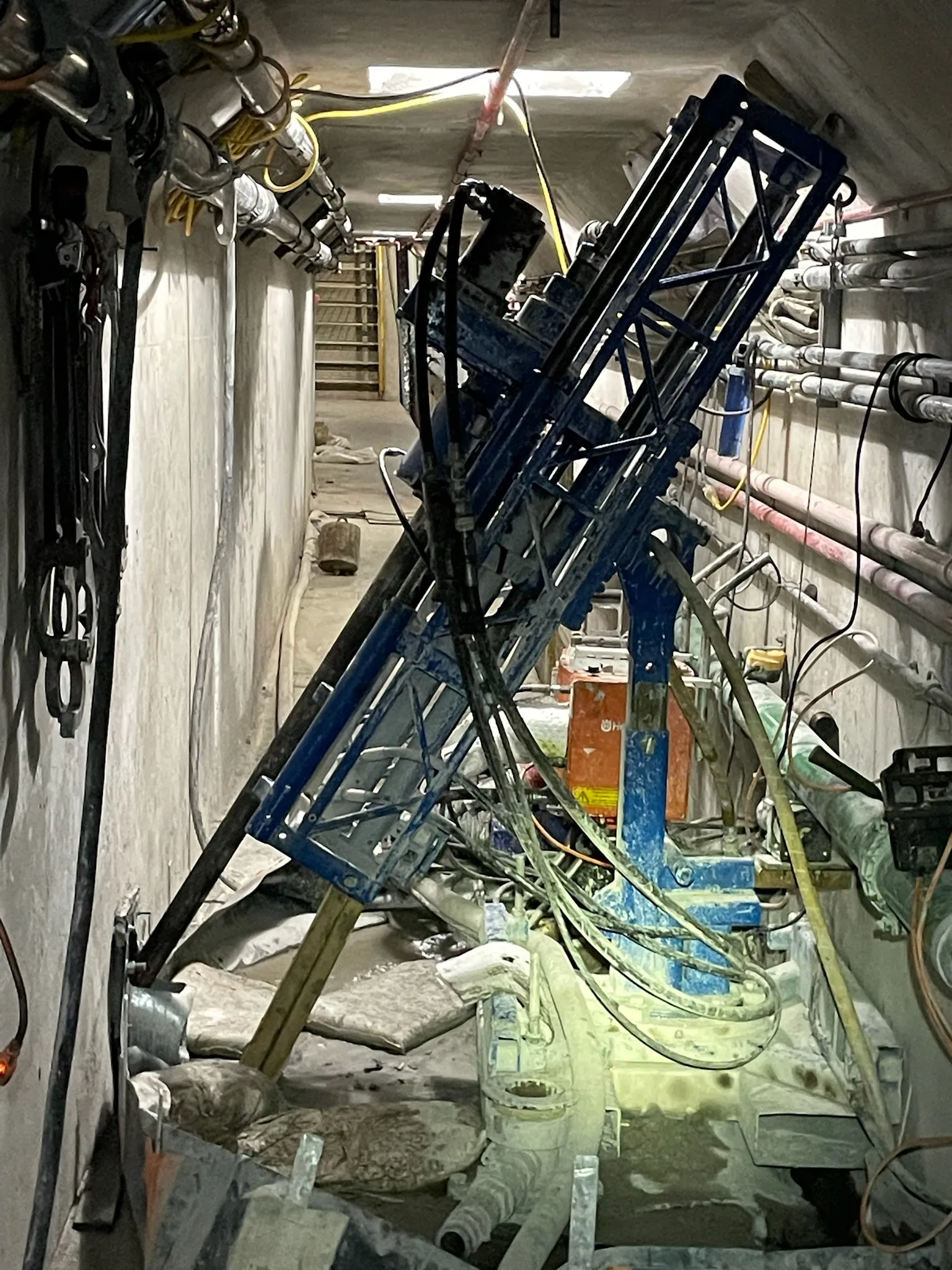
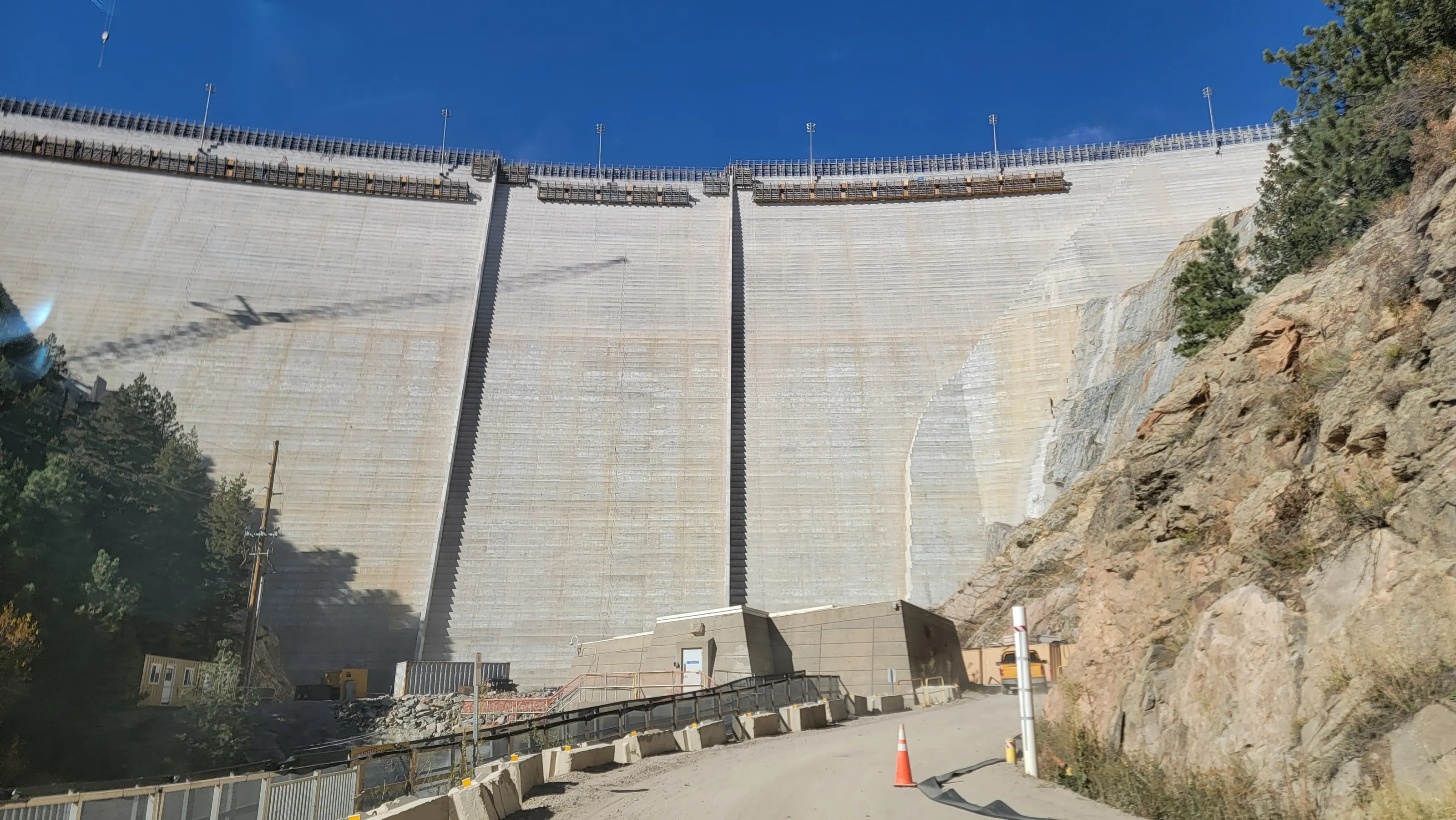
DA Smith completed the Phase 2 drilling and instrumentation program at Denver Water’s Gross Reservoir Dam near Boulder, Colorado, as part of the Gross Reservoir Expansion project. The work was conducted for the Kiewit-Barnard Joint Venture (KB) and followed DA Smith's successful 2024–2025 Phase 1 drilling and instrumentation program. The Phase 2 work focused on installing additional groundwater monitoring instrumentation within the existing dam and its foundation to support the expanded dam's long-term performance monitoring and dam safety program.
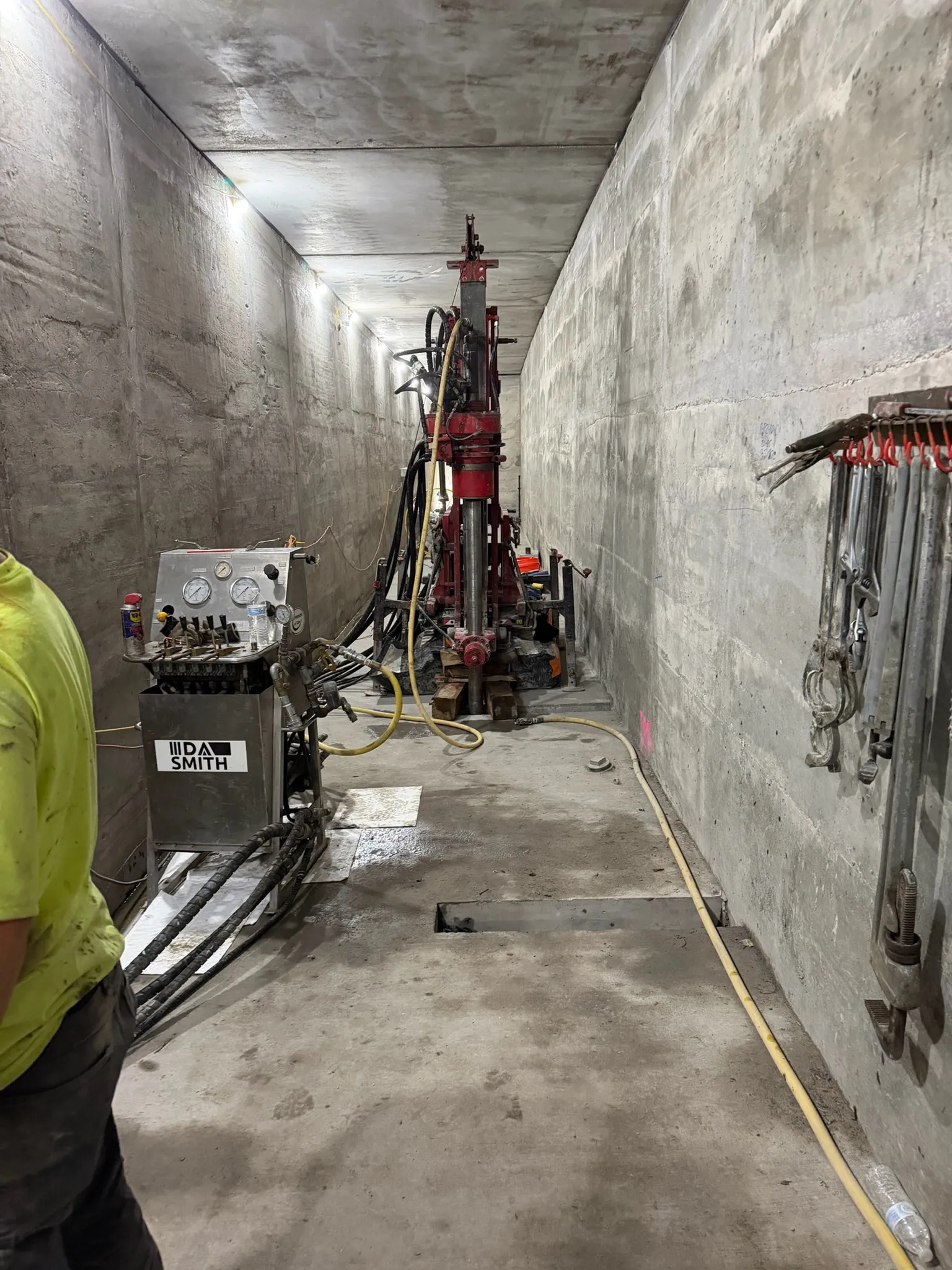
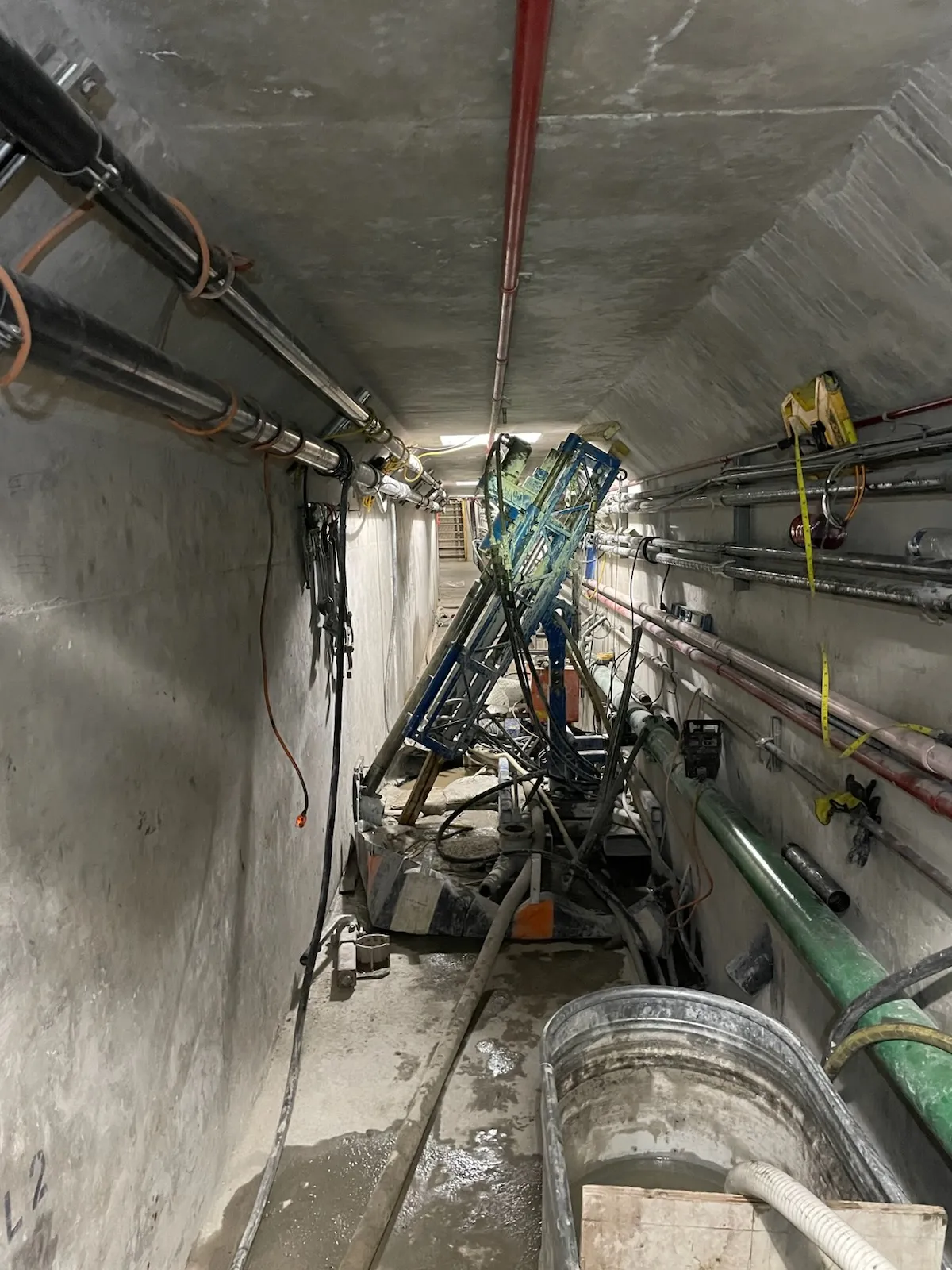
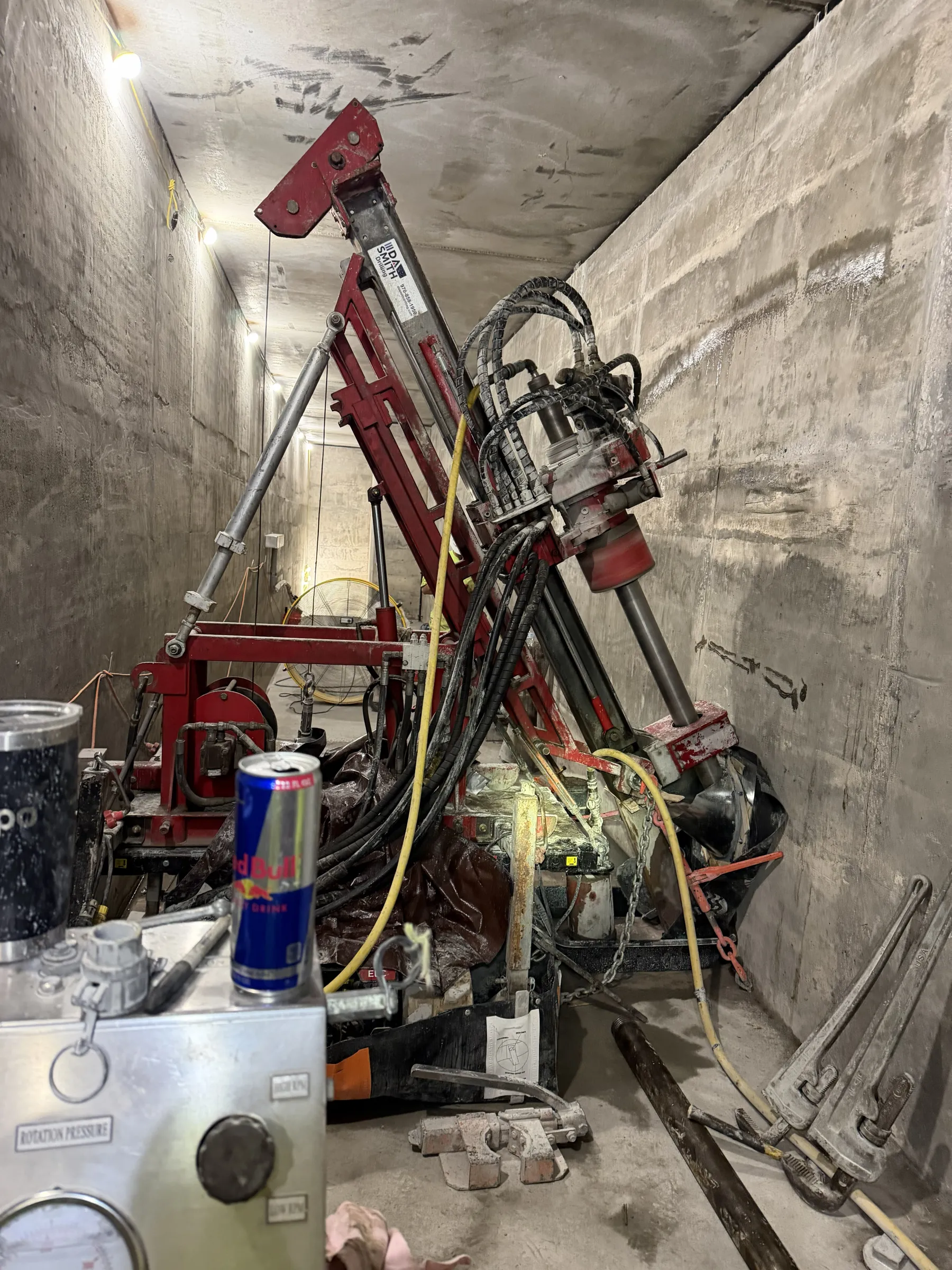
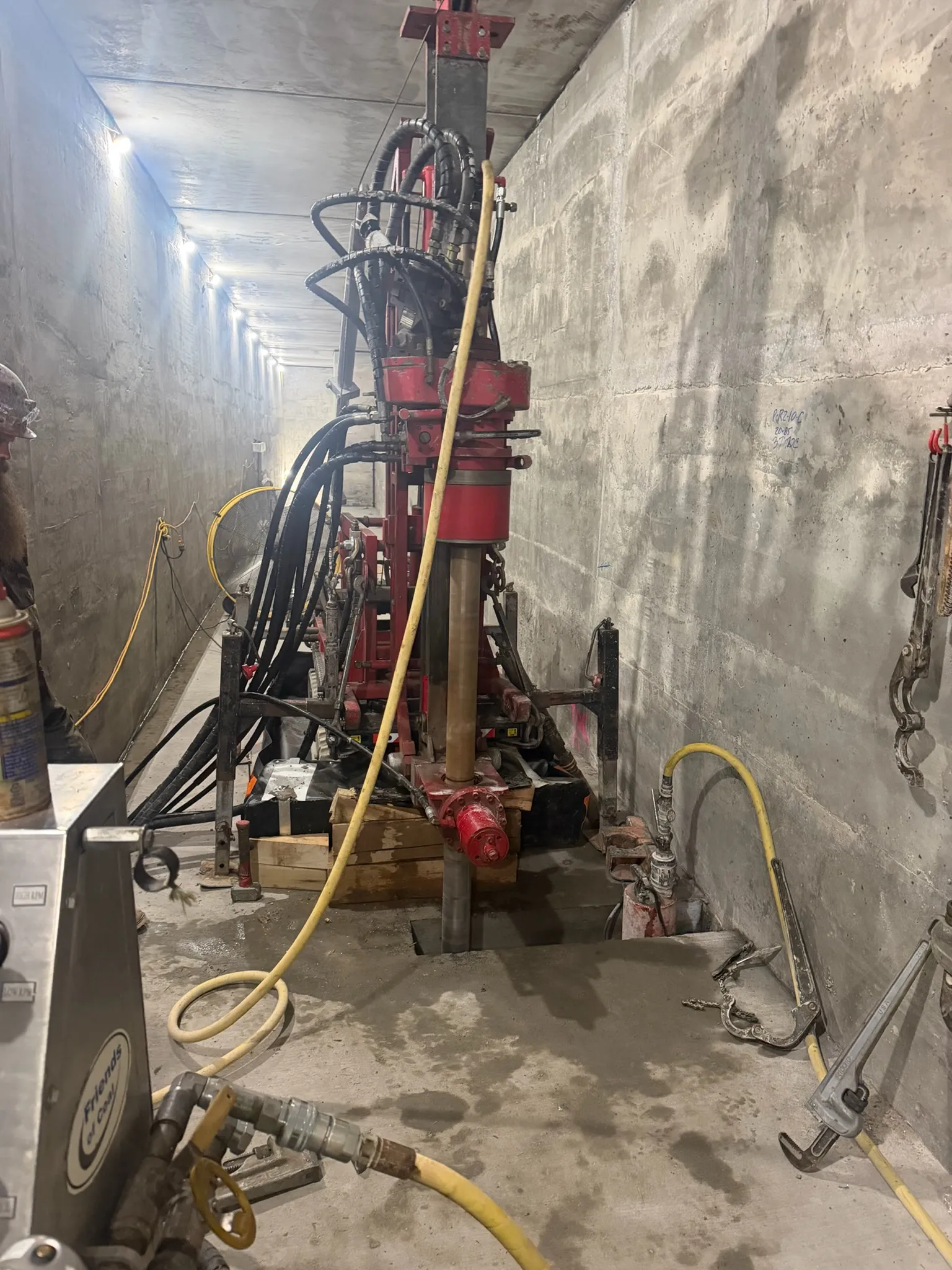
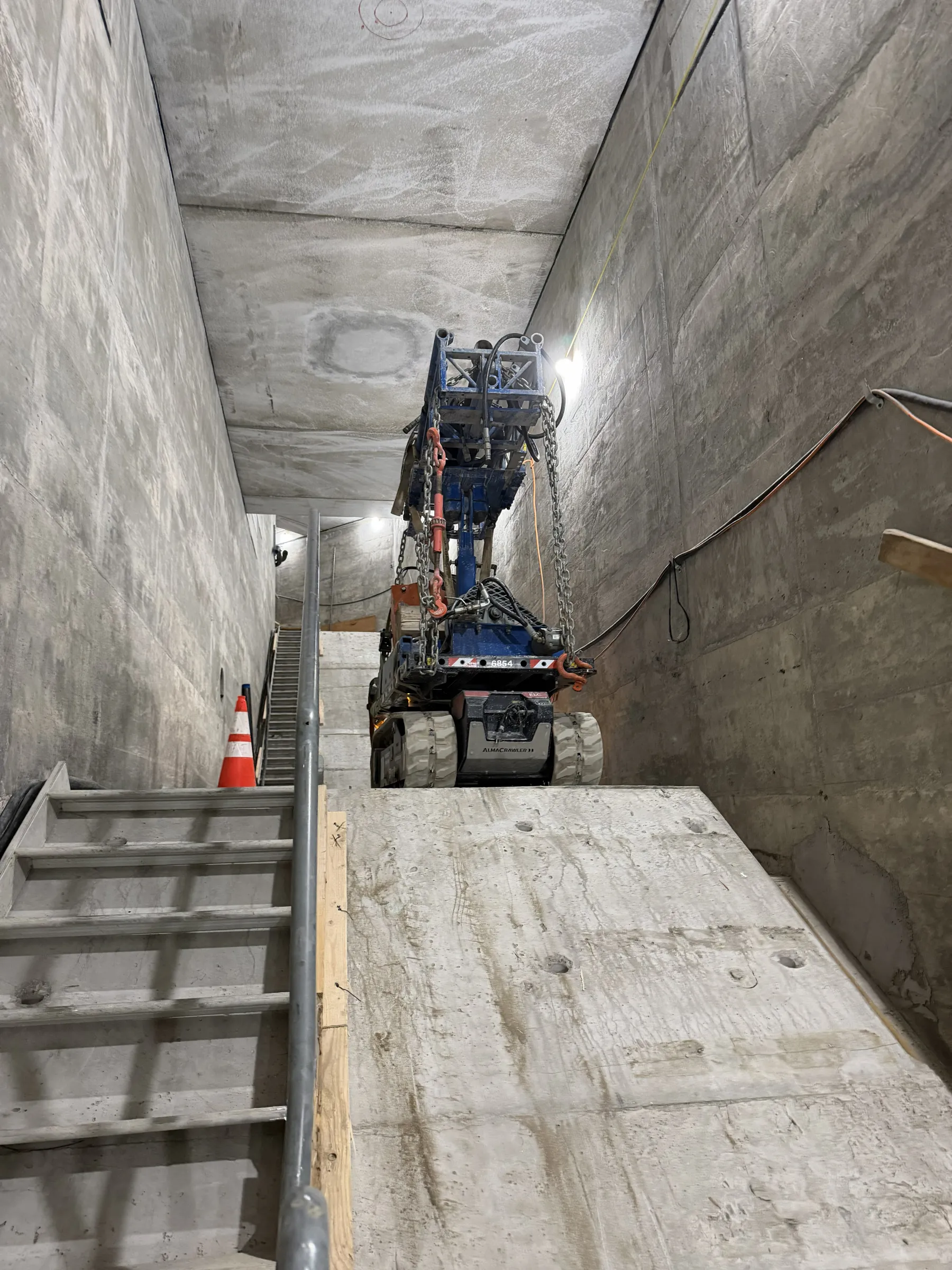
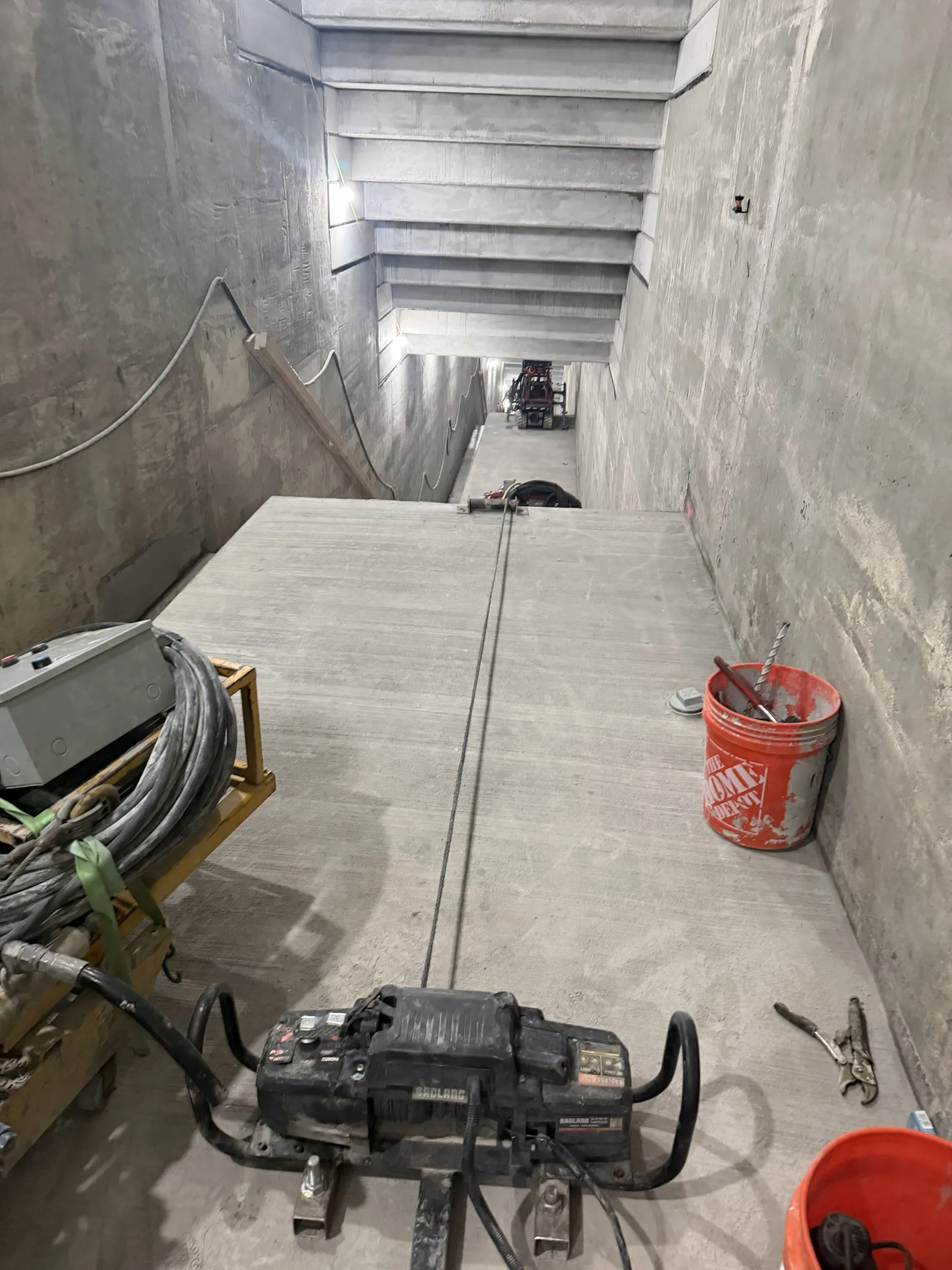
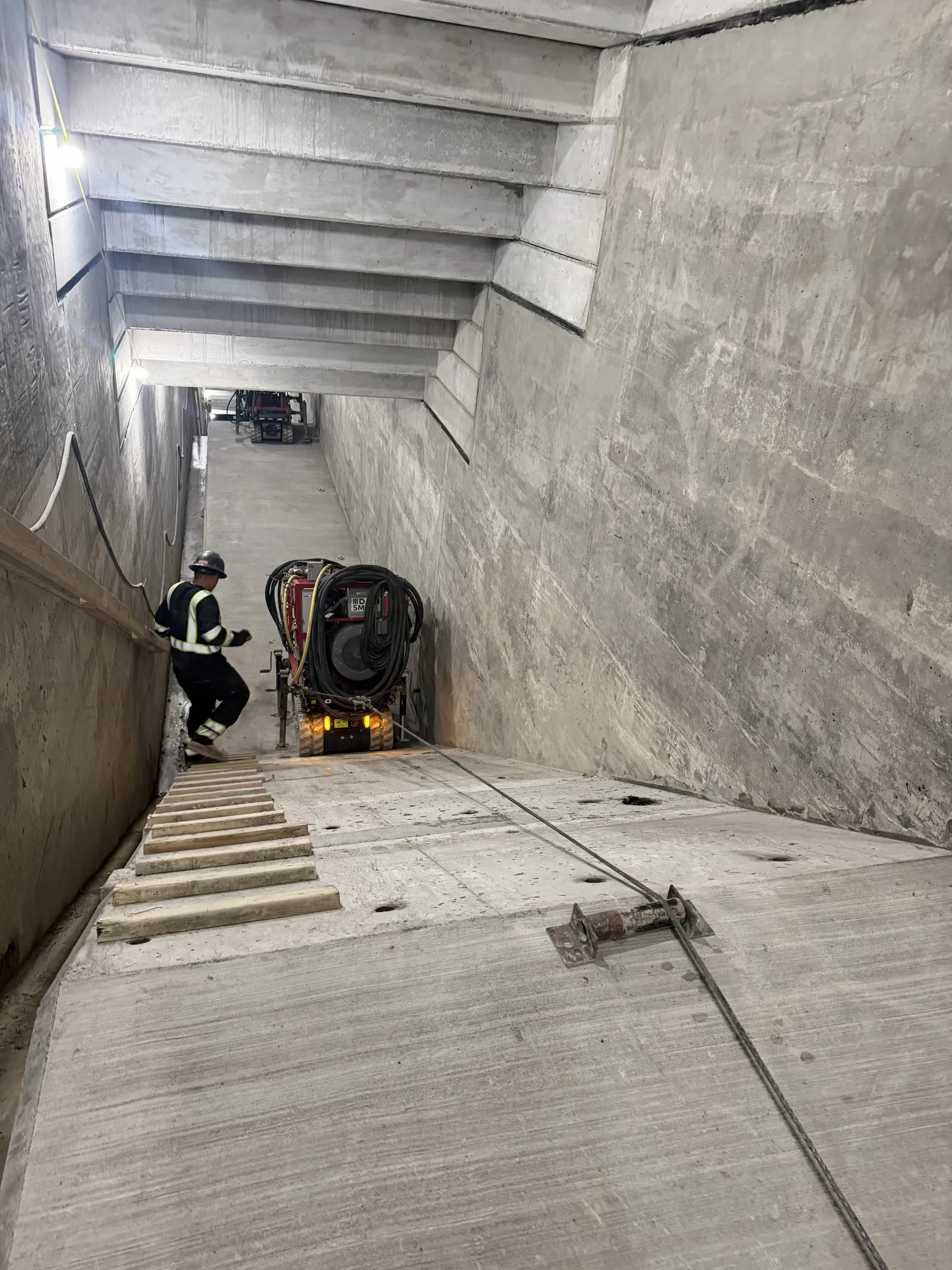
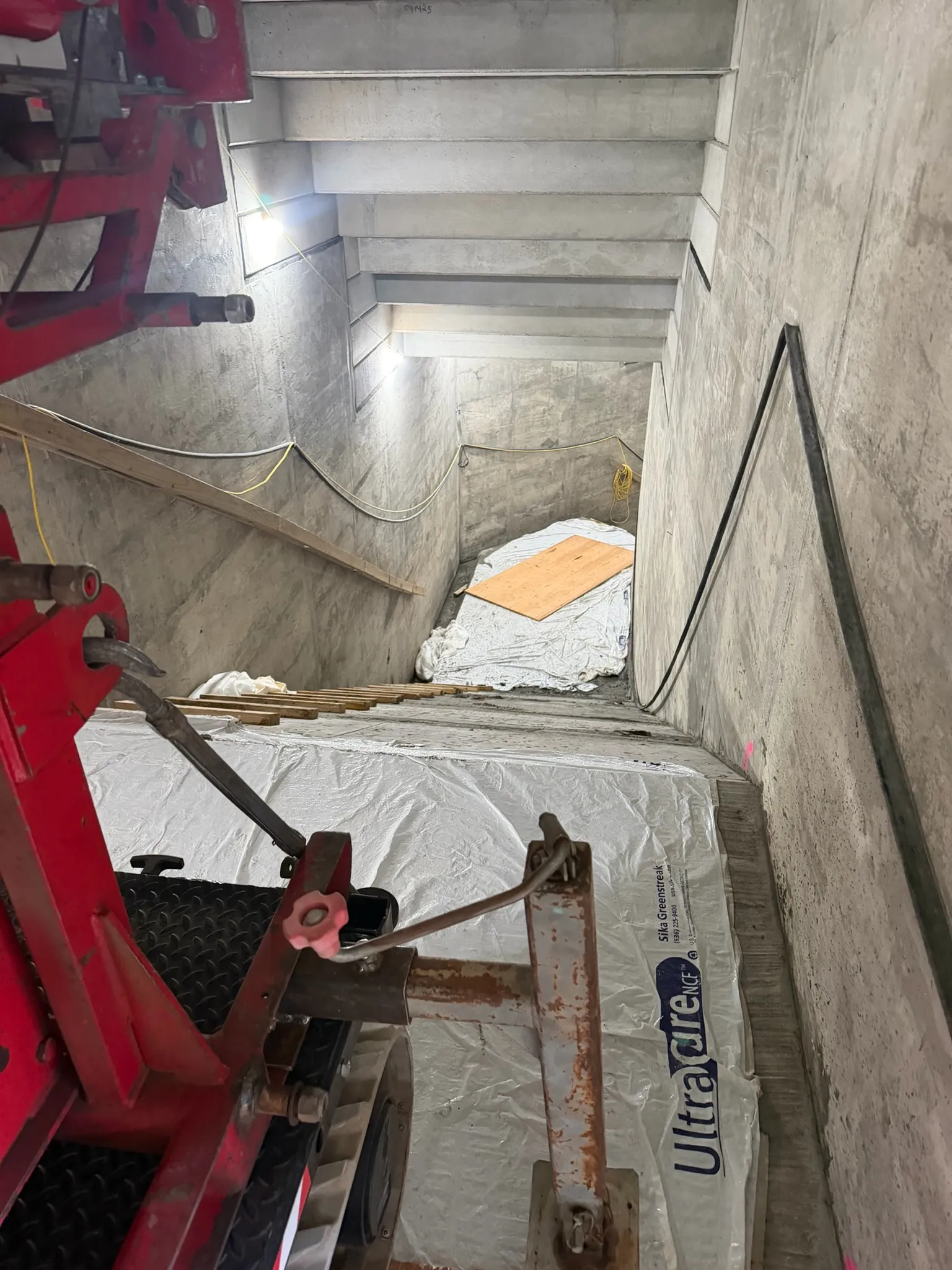
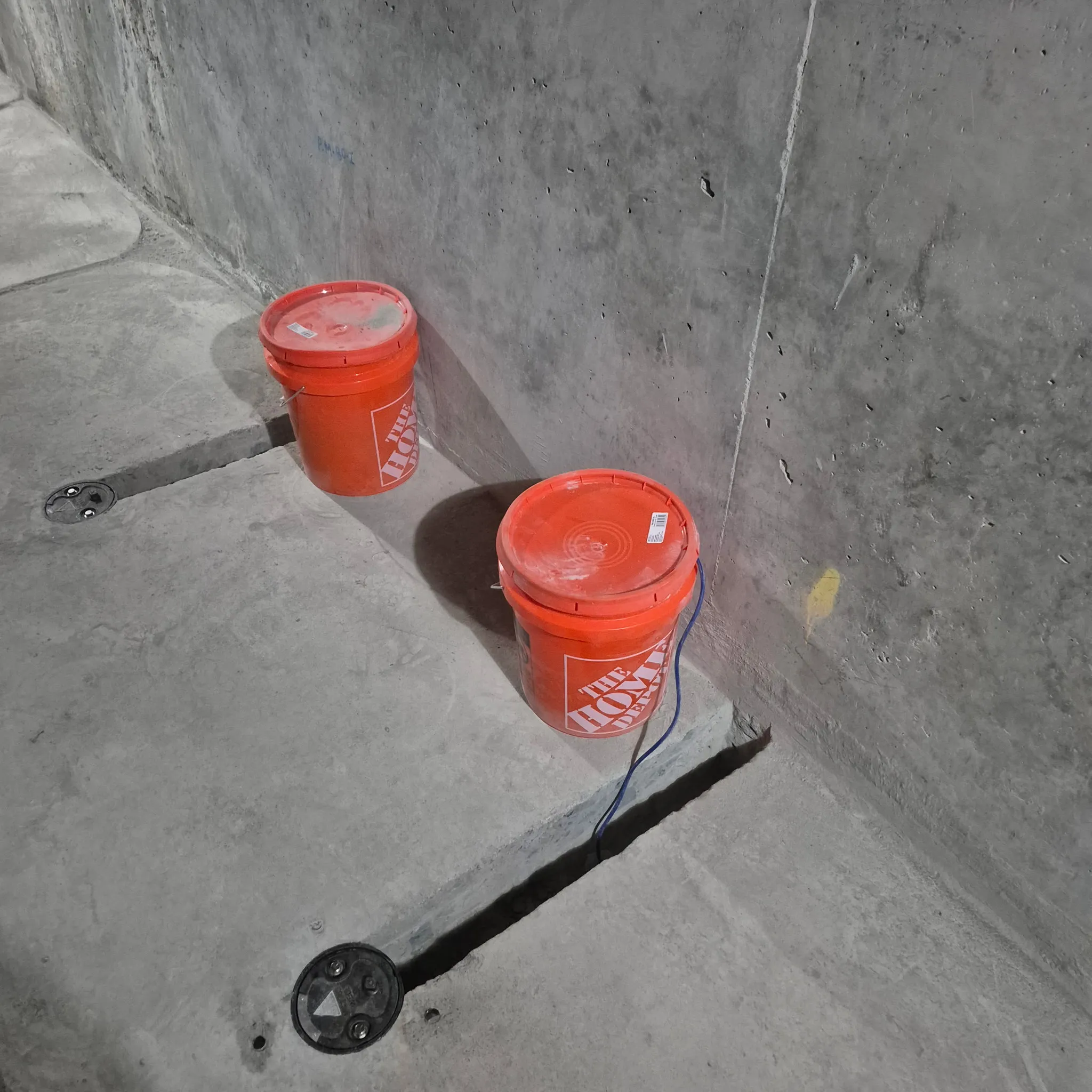
The drilling program was performed from within the dam's interior inspection and drainage galleries, where restricted access, limited working space, and the need to protect existing dam infrastructure presented unique operational challenges. DA Smith mobilized specialized drilling equipment and support systems suitable for working within the confined gallery environment. The work required careful equipment positioning, controlled drilling operations, and coordination with ongoing dam expansion construction activities.
The program included drilling vertical and inclined boreholes through existing concrete, roller-compacted concrete (RCC), and underlying bedrock. Boreholes were advanced using core drilling methods, with nominal 4-inch-diameter holes constructed at various elevations and locations within the dam. Selected boreholes extended more than 100 feet below the gallery floor. The work also included drilling and rehabilitation of foundation drainage holes to support groundwater pressure relief and drainage within the dam foundation.
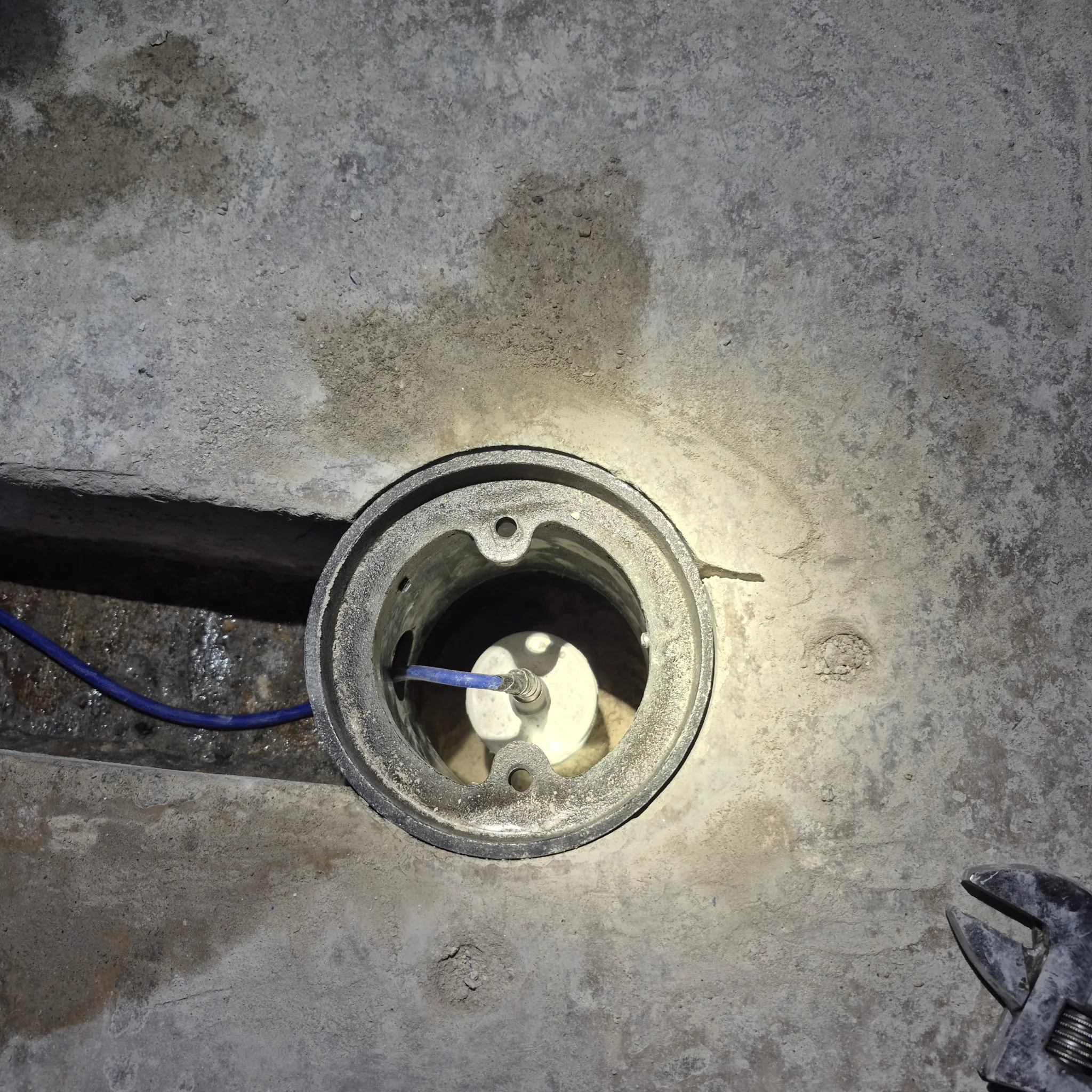
Monitoring boreholes were completed with vibrating-wire (VW) piezometers to measure groundwater pressures within the dam and underlying foundation rock. The piezometers were integrated into a live, networked nodal monitoring system, providing continuous, real-time groundwater pressure data to support dam safety monitoring and long-term evaluation of dam and foundation performance. Wells were completed with 2-inch PVC riser pipe, prepacked screened intervals, filter sand, bentonite seals, cement-bentonite grout, and mechanical packers. Both vertical and inclined monitoring wells were drilled from within the dam galleries, including inclined boreholes advanced through gallery walls to intersect designated monitoring zones within the dam and underlying foundation bedrock.
Several monitoring wells encountered artesian groundwater conditions, requiring specialized well completion procedures to safely control groundwater pressures and prevent uncontrolled discharge into the dam galleries. These wells were equipped with specially designed high-pressure well caps incorporating watertight feedthroughs for the vibrating-wire piezometer cables. The feedthroughs provided a sealed wellhead assembly while allowing continuous transmission of instrumentation signals. These installations required careful management of artesian pressures during drilling, instrumentation placement, and final wellhead completion to maintain well integrity and reliable long-term monitoring.
The installations required careful control of borehole geometry, instrumentation placement, annular sealing, and cable routing to maintain the integrity of the monitoring systems and prevent unintended hydraulic communication between monitored intervals. Completed wells were documented through detailed installation records and as-built drawings identifying borehole orientation, drilled depth, subsurface conditions, screen intervals, sealing materials, and piezometer sensor elevations.
DA Smith subcontracted Colog to perform high-resolution optical and acoustic borehole televiewer logging (OBI and ABI) in all boreholes. The logging provided detailed, continuous imagery of the borehole walls and supported statistical fracture analyses to characterize rock mass discontinuities, including fracture frequency, orientation, and distribution. The resulting data provided valuable information on foundation bedrock conditions, supporting hydrogeologic characterization and evaluation of the dam foundation.
The work required close coordination with the project team and regulatory stakeholders, including Kiewit-Barnard, AECOM, Black & Veatch, the Colorado Division of Water Resources, and Denver Water. This coordination was essential to integrating drilling, borehole logging, instrumentation installation, and groundwater monitoring activities with ongoing dam construction operations while maintaining compliance with project specifications, dam safety requirements, and regulatory oversight.
The Phase 2 program expanded the instrumentation network established during the initial drilling campaign and provided additional groundwater pressure monitoring locations within the dam and its foundation. These installations contribute to the evaluation of seepage conditions, foundation groundwater pressures, and the long-term performance of the raised dam.
Together with the earlier drilling and instrumentation work, the Phase 2 program demonstrates DA Smith's capabilities in specialized dam drilling, tight-space drilling operations, foundation drainage, and precision geotechnical instrumentation installation on major water infrastructure projects.
Project partners and links
- Denver Water denverwater.org
- Gross Reservoir Expansion denverwater.org
- Kiewit-Barnard kiewit.com
- Colog colog.com
- AECOM aecom.com
- Black & Veatch bv.com
- Colorado Division of Water Resources dwr.colorado.gov
Project site Our base, Grand Junction, CO

Dams · Instrumentation
Gross Dam, Boulder, Colorado
DA Smith completed surface drilling, monitoring wells completions, and installed downhole instrumentation at Denver Water's Gross Reservoir Dam near Boulder, Colorado, for the dam raise.
Dams · In Situ Stress Measurements
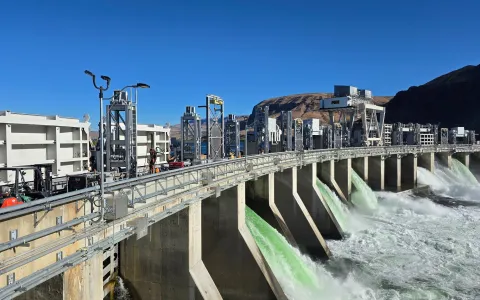
Rock Island Dam, Wenatchee, Washington
DA Smith performed specialized core drilling, in situ stress measurements, and geotechnical instrumentation installation to support dam safety evaluation and long-term monitoring at Rock Island Dam.
Dams · Geotechnical
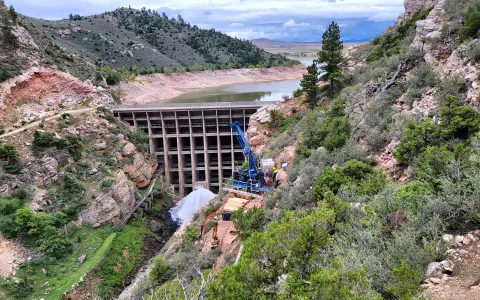
La Prele Dam 2023 Helicopter Drilling, Douglas, Wyoming
In September 2023, DA Smith completed a second helicopter-supported season at La Prele Dam near Douglas, Wyoming, for RESPEC's geotechnical study.